

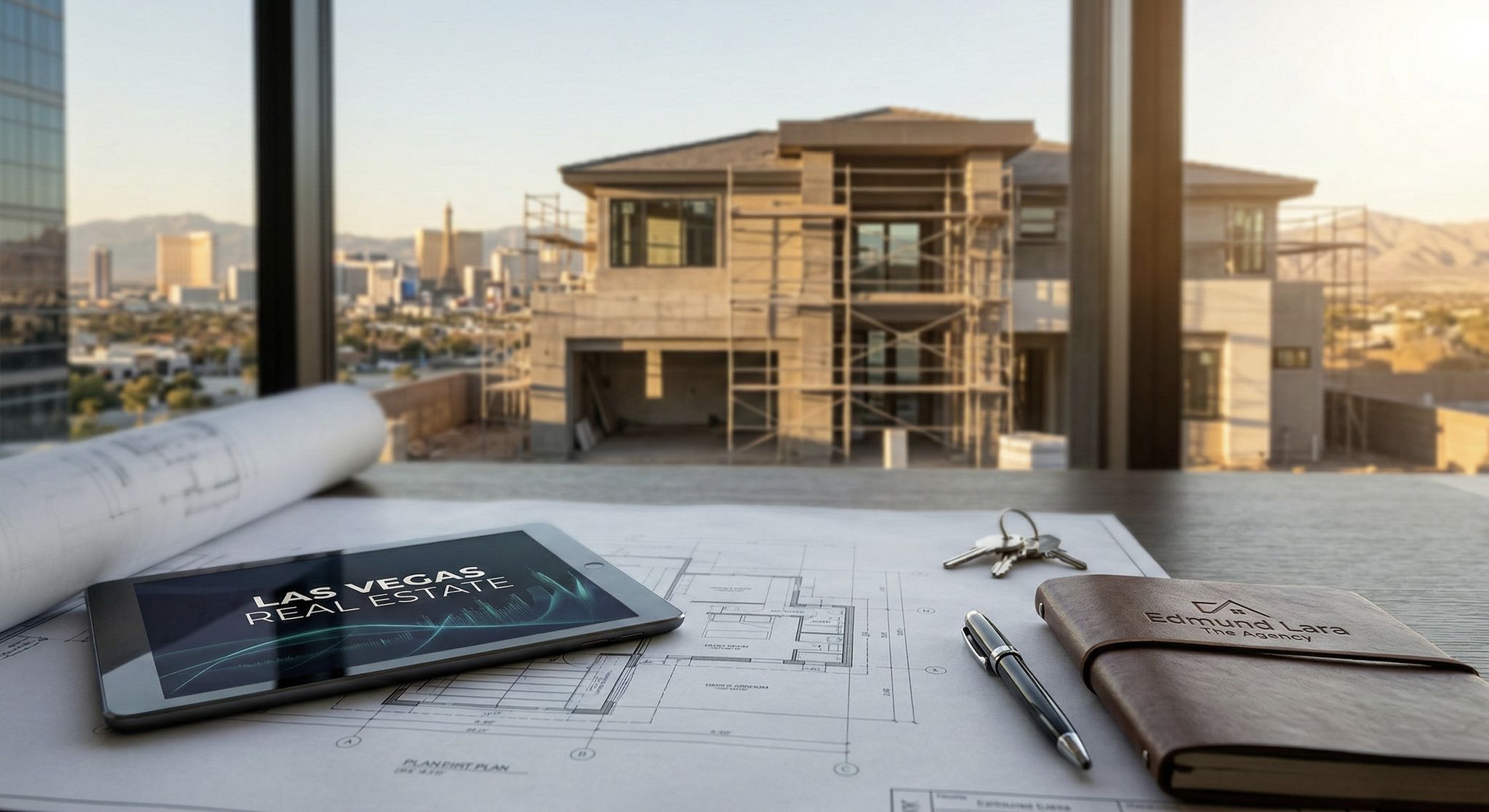
The allure of new construction is undeniable.
Brand-new homes. Clean lines. Modern architecture. The promise that everything is untouched and built just for you.
For many buyers relocating from California, it feels like the most logical path into the Las Vegas market.
You tour a perfectly staged model home.
The finishes are curated.
The lighting is cinematic.
The sales office assures you the process will be effortless.
But here's the reality experienced buyers learn quickly:
New construction is not retail. It's strategy.
Behind the polished presentation are pricing structures, incentives, and contract terms designed to protect the builder's margins—not necessarily your long-term equity.
Before stepping into a sales office in Summerlin, Henderson, or the rapidly expanding northwest valley, there are several variables sophisticated buyers need to understand.
1. Builder Incentives vs. Price Reductions
Walk into almost any new development and you'll hear a variation of the same line:
"We're offering $25,000 to $40,000 in incentives."
On the surface, it sounds like a generous deal.
But builders rarely lower the actual purchase price. And there is a very specific reason for that.
Lower prices damage the builder's comparable sales.
If a builder drops the recorded price of a home, it affects the value of every remaining home they plan to sell in that community.
So instead, builders maintain the official price and offer incentives such as:
• Closing cost credits
• Mortgage rate buydowns
• Design center allowances
• Appliance packages
The number looks attractive, but it doesn't necessarily mean the home is priced competitively.
Strategic Insight
The smarter comparison is not incentives vs price.
It's:
• Total acquisition cost
• Price per square foot
• Nearby resale values
Sometimes the best "deal" isn't in the sales office—it’s the home already finished across the street.
2. Lot Premiums: The Hidden Entry Fee
The advertised base price of a new home is rarely the price buyers actually pay.
Why?
Because the lot itself carries its own pricing structure.
In Las Vegas master-planned communities, lot premiums are standard practice and can vary dramatically depending on the location within the neighborhood.
Common premium triggers include:
• Cul-de-sac positioning
• Larger backyard space
• Corner lots
• Mountain or Strip views
• Homes backing to open desert or trails
And the model home you toured?
Almost always placed on one of the most expensive lots in the entire community.
Lot premiums commonly add:
$25,000 – $150,000+
before any design selections are made.
3. The Design Center: Where Budgets Expand
The design center is one of the most exciting parts of buying new construction.
It’s also where many buyers unknowingly lose financial leverage.
Builder "standard" finishes are intentionally minimal. This encourages buyers to upgrade items such as:
• Quartz or stone countertops
• Cabinet packages
• Extended kitchen islands
• Luxury flooring
• Stair railings and architectural details
What begins as small upgrades often becomes $30,000–$80,000 in additional costs.
And unlike many resale improvements, these upgrades are often financed within the purchase price—meaning buyers pay interest on them over time.
The Strategic Rule
There is a clear difference between structural upgrades and cosmetic upgrades.
Upgrade through the builder:
• Additional bedrooms
• Larger sliding doors
• Ceiling height changes
• Structural layout changes
Upgrade after closing:
• Lighting
• Backsplash
• Paint
• Landscaping
This approach can save tens of thousands while producing a better final result.
4. The Reality of HOA Layers
Most new construction in Las Vegas exists inside master-planned communities.
These communities offer beautiful amenities—parks, walking trails, community centers—but they also come with layered fee structures many relocating buyers don't expect.
It's not uncommon for homes to have:
• A Master HOA (community-wide amenities)
• A Sub HOA (specific gated neighborhood)
Combined HOA costs frequently range between:
$150 – $400+ per month
depending on the location and level of amenities.
For buyers moving from California, this structure is often surprising—especially when multiple associations exist within the same development.
5. Builder Contracts Are Not Standard Real Estate Contracts
Most buyers assume buying from a builder follows the same process as buying a resale home.
It does not.
Resale homes in Nevada typically use standardized real estate contracts.
Builders use their own contracts, designed primarily to protect their construction timelines and liability exposure.
These agreements often include:
• Limited cancellation options
• Flexible construction timelines
• Reduced repair negotiations
• Builder-controlled closing schedules
None of this is inherently negative—but it does mean buyers should fully understand the terms before signing.
6. The Real Math: New Construction vs. Resale
New construction offers clear advantages:
• Energy efficiency
• Modern layouts
• Builder warranties
• Customization options
But resale homes frequently include improvements that would otherwise cost buyers significant money to install.
Many resale homes already feature:
• Completed landscaping
• Window coverings
• Pools or outdoor kitchens
• Mature neighborhood landscaping
• Premium appliances
A resale property listed at $900,000 may include $120,000+ in finished upgrades, while a new construction home at a similar price may still require those improvements.
This is why experienced buyers evaluate total lifestyle cost, not just the initial purchase price.
The Relocation Reality Check
This is especially important for buyers moving from California.
Many clients arrive expecting new construction to be the most straightforward option.
But once we factor in:
• Lot premiums
• Design upgrades
• Backyard construction
• Window treatments
• HOA costs
the financial picture can shift dramatically.
In many cases, a well-positioned resale home offers better value, faster move-in timelines, and stronger resale stability.
The Bottom Line
New construction can absolutely be the right move in Las Vegas.
But the smartest buyers approach it the way investors approach any major asset purchase:
With data.
With strategy.
And with a clear understanding of how builders structure their pricing.
The sales office is designed to make you feel like a guest.
My job is to make sure you're negotiating like an owner.
Because in Las Vegas Real Estate, The House Always Wins.
Check out this article next